High-Volume Niches and Platform Distribution
Our intelligence feed captured 40 fresh launches today, signaling a highly active development window. The supply pulse is heavily dominated by Productivity (31 launches) and Developer Tools (26 launches), followed closely by AI Agents (20 launches). Lovable templates represent a massive portion of this supply, indicating a broader market shift toward rapid prototyping, modular SaaS deployments Modular SaaS deployments Building and launching software applications using pre-made, interchangeable components rather than coding every feature from scratch. This approach allows founders to assemble and launch products much faster by leveraging existing software building blocks. Example: A founder using pre-built Lovable templates to quickly deploy a customer portal without writing the database or authentication code from scratch. , and low-code internal tool generation. Founders are increasingly leveraging pre-built architectures to bypass the initial friction of environment setup and boilerplate writing Boilerplate writing The process of writing standard, repetitive code required to start a software project, such as user authentication, database connections, and basic page layouts. It is necessary for the app to run but does not add unique value to the product. Example: Using pre-built architectures to instantly set up a secure login screen so developers can bypass initial setup friction and focus on building their core features. .
Market Gaps and Unmet Founder Needs
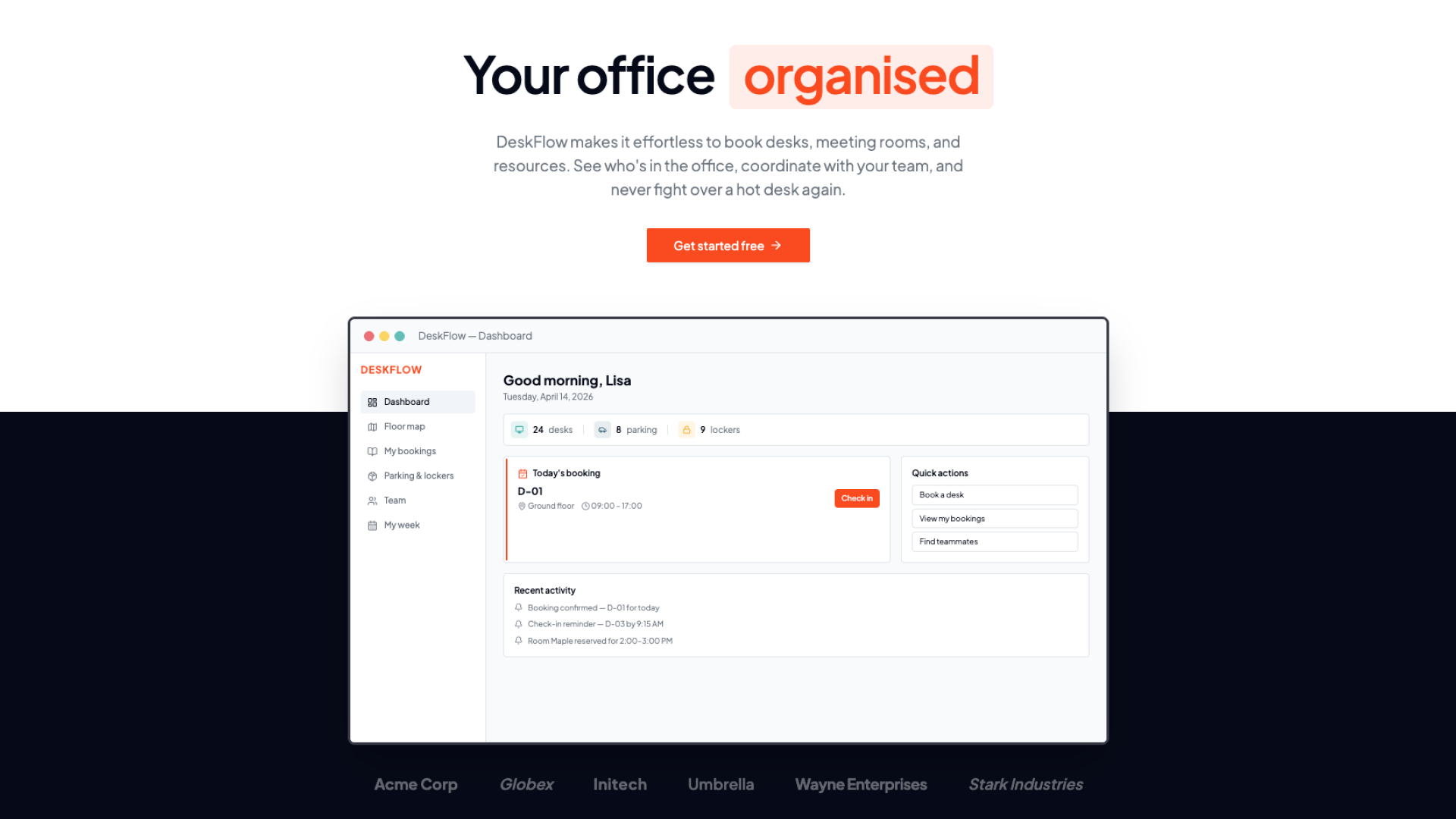
Several high-value white spaces White spaces Under-served areas or unmet customer needs in the market where there is currently little to no competition. Identifying these gaps allows startups to build highly targeted solutions with less direct competition. Example: The lack of specialized scheduling software designed specifically for clinical nursing shifts rather than standard nine-to-five office workers. have emerged from our analysis of recent community discussions and directory submissions. First, there is a clear demand for shift-based healthcare workflows; existing task managers target traditional office workers, leaving a gap for specialized nursing and clinical shift planners. Second, simple, browser-based EPUB-to-audio converters are gaining traction as users seek alternatives to expensive subscription-walled audio platforms. Finally, GDPR-compliant, EU-hosted time trackers like Cadensa point to a growing regulatory-first niche Regulatory-first niche A market segment where compliance with specific laws and regulations, such as data privacy or financial rules, is the primary value proposition. Startups in this space win customers by being fully compliant where larger, general-purpose competitors are not. Example: A time-tracking tool like Cadensa that targets European companies by hosting all user data locally within Europe to guarantee strict GDPR compliance. in the productivity sector.
AI Agent Infrastructure and Testing Demands
While AI agents represent one of the fastest-growing categories with 20 active launches, a significant infrastructure gap remains. Specifically, there is a lack of standardized, open-source testing and orchestration harnesses Orchestration harnesses Software frameworks or tools used to manage, coordinate, and test the complex workflows of multiple AI models or autonomous agents. They ensure different parts of an AI system communicate and execute tasks in the correct order. Example: A platform like CortexPrism.io that helps developers track, test, and manage how an AI customer service agent interacts with database APIs and external systems. for AI agents. Projects like CortexPrism.io are attempting to solve this, but the market remains wide open for tools that assist developers in evaluating agentic reliability Agentic reliability The consistency and accuracy with which autonomous AI agents perform complex tasks without human intervention. High reliability means the AI consistently achieves the correct outcome without getting stuck, looping, or making errors. Example: Testing an AI travel assistant to ensure it successfully books the correct flight ninety-nine percent of the time instead of failing due to unexpected website layout changes. , cost, and execution paths before production deployment.